
Share :


Opening a new boutique or launching an e-commerce brand is an exciting milestone. Yet, almost every founder faces the exact same question during setup: How much inventory should a new jewelry store buy?
Stocking too little leaves your displays looking sparse and frustrates eager shoppers, while overbuying ties up precious working capital in unsold merchandise. When building your opening stock—especially in high-demand categories like silver jewelry—a strategic balance between design variety, inventory depth, and cash flow is critical.
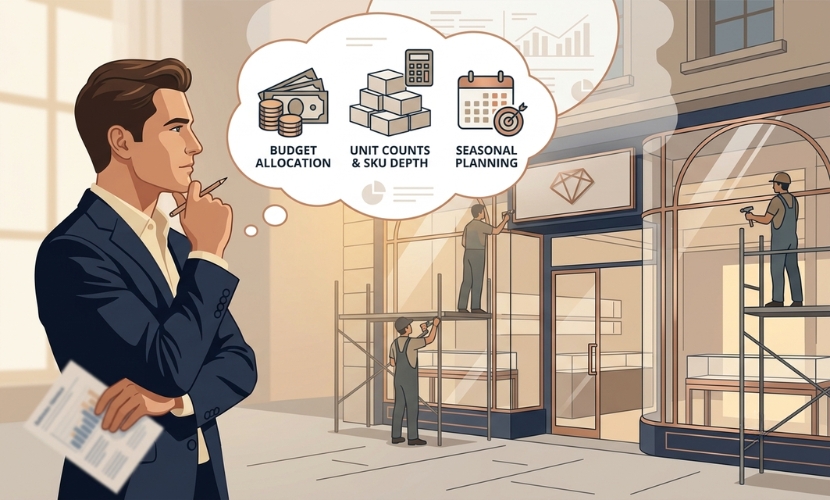
In this guide, we will explore how to calculate your initial budget, manage inventory risks, time seasonal orders, and structure a high-performing first order for your new store.
Unlike general apparel or fast fashion, managing jewelry inventory presents unique physical and financial challenges:
High Value, Small Footprint: Jewelry is compact yet high in value. A single small display tray of sterling silver rings can hold thousands of dollars in stock, requiring secure storage and precise SKU tracking.
Precious Metal Volatility: Market prices for silver fluctuate, directly affecting production and wholesale acquisition costs over time.
Trend vs. Timeless: Retailers must constantly balance timeless core basics (classic hoops and studs) with fast-moving seasonal fashion trends.
Jewelers often carry higher inventory levels relative to annual sales than clothing stores. Why is holding a larger stock value acceptable in the jewelry trade?
Intrinsic Value & Durability: High-quality 925 sterling silver does not spoil, degrade, or go out of style like seasonal fashion. Unsold pieces retain intrinsic precious metal value.
Strong Profit Margins: Fine and fashion silver jewelry commands healthy margins (often 2.5× to 3× keystone markup), which easily absorb carrying costs for slower-moving statement items.
Compact Storage Footprint: Storing $20,000 worth of silver jewelry requires only a single safe, whereas $20,000 in apparel requires substantial warehouse space.
Understanding wholesale pricing drivers helps you plan your purchasing budget effectively:
Raw Silver Spot Prices: Pure silver market rates establish baseline material costs.
Craftsmanship & Finishing: Intricate stone setting, hand-polishing, and protective e-coatings add labor value.
Plating & Finishes: 14K gold plating or rhodium plating protects silver against tarnishing while boosting perceived retail value.
Ethical Manufacturing: Sourcing from established manufacturers guarantees consistent metal purity and responsible production.
A reliable benchmark for a new store is the 30–50% revenue target rule. Estimate your projected Year 1 retail sales, then allocate 30% to 50% of that figure toward your initial Cost of Goods Sold (COGS) inventory budget.
For example, if you project $100,000 in Year 1 revenue with a target 50% gross margin, your opening stock investment should sit between $15,000 and $25,000.
For a balanced assortment, follow a 70/30 inventory split:
70% Core Essentials: High-velocity everyday staples (studs, hoops, chain necklaces, stackable rings).
30% Trend & Statement Pieces: Eye-catching designs, seasonal icons, and bold focal items.
| Product Category | % Allocation | Dollar Value | Retail Markup | Sample SKUs |
| Earrings & Studs | 30% | $1,500 | 2.5× – 3.0× | Classic huggies, CZ studs, silver hoops |
| Rings & Stackables | 25% | $1,250 | 2.5× – 3.0× | Minimalist bands, gemstone rings |
| Pendants & Chains | 25% | $1,250 | 2.5× – 3.0× | Layering chains, celestial pendants |
| Bracelets & Bangles | 15% | $750 | 2.5× – 3.0× | Fine link bracelets, adjustable bangles |
| Statement / Trend | 5% | $250 | 3.0× + | Bold focal rings, seasonal motifs |
A smart opening order prioritizes stock depth over excessive variety. Rather than ordering 100 single unique pieces, select 20 to 30 proven styles and purchase 3 to 6 units per SKU. This ensures you can fulfill immediate sales without running out of top sellers right away.
To explore high-margin designs for your order, browse the wholesale catalog at Planet Silver in the Planet Silver Shop.
Jewelry retail is highly seasonal, with over 40% of annual retail sales occurring during Q4. Ordering 2 to 3 months ahead of major shopping events guarantees on-time delivery.
| Retail Event | Peak Sales Month | Wholesale Order Window | Focus Inventory |
| Valentine’s Day | February | November – December | Heart motifs, couple rings, pendants |
| Mother’s Day | May | February – March | Elegant necklaces, birthstone silver |
| Summer Season | June – August | March – April | Ankle bracelets, stackable rings, boho designs |
| Q4 Holidays | November – December | August – September | High-sparkle CZ sets, boxed gifts, statement pieces |
When finalizing your wholesale order, account for additional operational expenses:
Shipping & Customs: Allocate 5%–10% of order value for freight and tariffs.
Packaging & Branding: Branded jewelry boxes, pouches, and polishing cloths enhance unboxing experiences.
Displays & POS: Quality ring trays, neck stands, and inventory tracking software.
Before locking in your supplier, review our checklist of essential silver jewelry supplier questions to ask before you buy wholesale. Furthermore, establish your profit targets using proven pricing strategies to markup wholesale silver jewelry for retail success.
Building a Profitable Retail Store
Finding a trusted wholesale partner is vital for steady inventory flow. Learn more about order minimums and production on our Wholesale Information page, and read reviews from other retail buyers on our Testimonials page.
With a well-structured budget, top-selling silver jewelry, and disciplined seasonal planning, your new store will be set up for sustainable profitability.